What Is an NDA? When You Need One (and When You Don't)
A non-disclosure agreement (NDA) is a contract in which one or both parties promise to keep certain information secret. It exists because the moment you discuss a business idea, share customer data or open your books to a potential partner, the law gives you surprisingly little automatic protection. The NDA creates that protection by agreement.
Mutual vs one-way
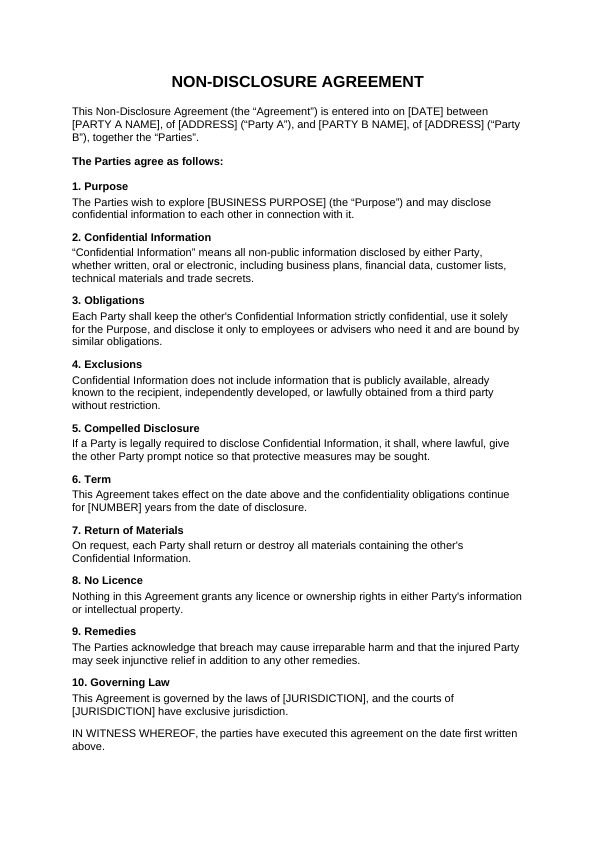
A one-way (unilateral) NDA protects a single discloser — typical when you hire a contractor who will see your client list but show you nothing confidential in return. A mutual NDA protects both sides and is standard for partnership talks, joint ventures and acquisition discussions where information flows in both directions. When in doubt, mutual is the easier ask: nobody feels they are taking on obligations the other side escaped.
The clauses that actually matter
Definition of confidential information. Too narrow and things slip through; too broad ("all information disclosed") and courts in some jurisdictions may refuse to enforce it. Good NDAs describe categories — business plans, financials, customer lists, technical material.
Exclusions. Standard carve-outs: information already public, already known to the recipient, independently developed, or lawfully received from a third party. An NDA without exclusions is a red flag.
Term. Confidentiality obligations commonly run two to five years from disclosure. "Forever" sounds strong but can be unenforceable; genuine trade secrets are usually protected separately by law regardless.
Remedies. The clause acknowledging that a breach causes harm money cannot fix, allowing the injured party to seek an injunction — often the only remedy that matters, since proving financial damage from a leak is hard.
When an NDA is the wrong tool
Investors generally refuse to sign NDAs for pitches — they see too many similar ideas, and asking signals inexperience. Job interviews rarely justify one. And no NDA substitutes for judgement: it gives you the right to sue after a leak, not a guarantee the leak never happens. Share the minimum necessary, NDA or not.
Before you sign one
Read the definition of confidential information (could you accidentally breach it?), check whether obligations are mutual or one-sided, note the term, and look for anything that is not really about confidentiality — non-competes and IP assignments sometimes hide inside NDAs. For high-stakes deals, have a lawyer review the final wording for your jurisdiction.