How to Write an Invoice: What to Include So You Get Paid
An invoice is a payment instruction disguised as a document. Every element on it should either tell the client exactly what they are paying for, or remove an excuse to pay late. Most late payments are not malice — they are invoices missing a detail that lets them stall in someone's approval queue.
The eight essentials
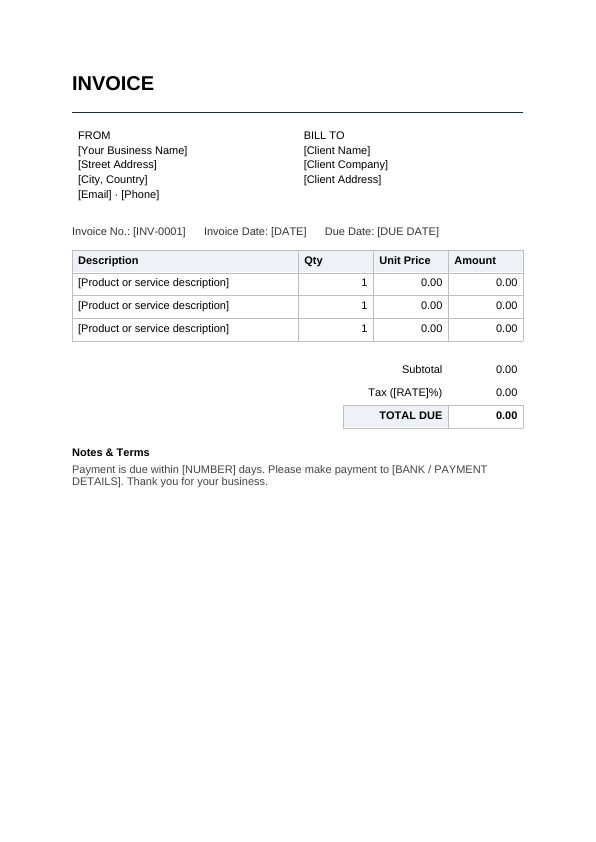
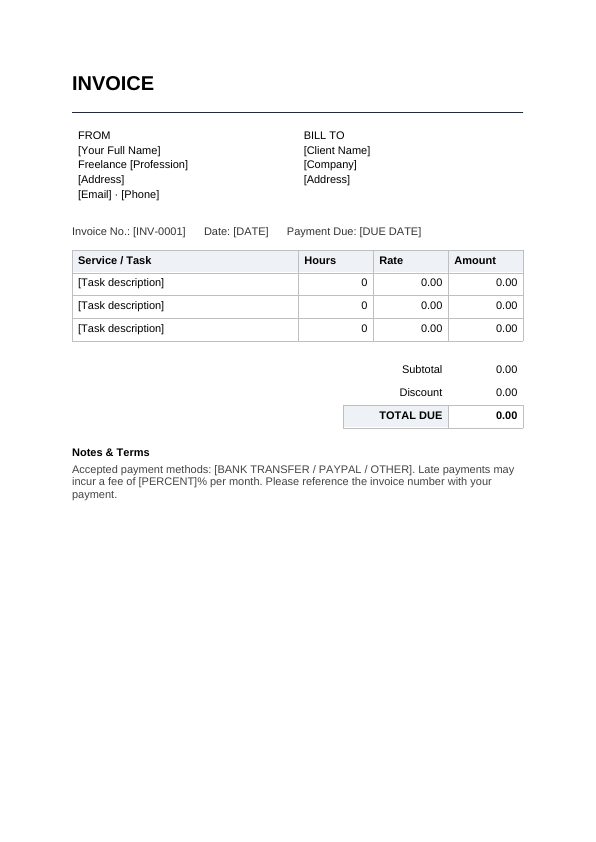
Every invoice needs: (1) the word "Invoice" clearly at the top — not "bill" or "statement", which accounting departments treat differently; (2) a unique invoice number, because most companies cannot process a payment without one; (3) your business name and contact details; (4) the client's name and, for companies, the entity name exactly as registered; (5) an issue date and a due date; (6) itemised descriptions with quantities and unit prices; (7) the total, with any tax shown separately; and (8) payment details — bank account, IBAN, or payment link.
Invoice numbers that scale
Pick a format on day one and never deviate: sequential (INV-0001, INV-0002) is simplest and what tax auditors prefer, since gaps raise questions. Some businesses embed the year (2026-014), which makes year-end bookkeeping easier. Whatever you choose, never reuse or skip numbers.
Descriptions clients approve without questions
"Consulting — 12 hours" gets queried; "Consulting: checkout flow redesign, 4–8 June, 12 hrs @ 150" gets approved. Write descriptions for the person in accounts who has never spoken to you. If work was pre-agreed in a quote or purchase order, reference that number — it lets them match documents and pay without chasing anyone internally.
Payment terms that actually work
"Due within 30 days" is standard but negotiable — many freelancers use 14 days, and "due on receipt" is acceptable for small amounts. State consequences calmly: a line like "late payments incur 2% per month" rarely gets enforced, but measurably speeds up payment. For new clients or large projects, ask for a deposit (commonly 30–50%) before starting; an invoice for a deposit is a normal, professional document.
When the invoice goes unpaid
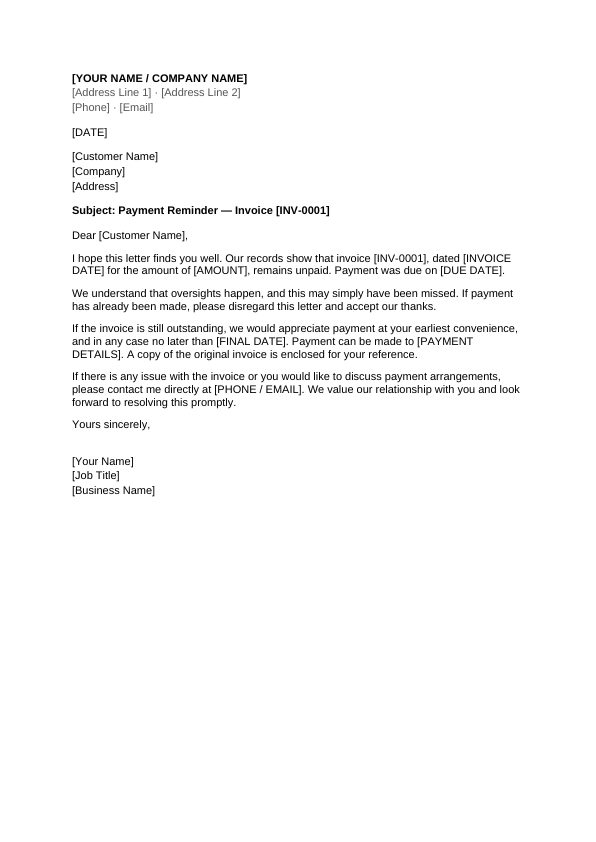
Have a sequence ready before you need it: a friendly nudge the day after the due date, a formal written reminder at one week, and a firmer letter at three weeks referencing the agreed terms. Doing this consistently — politely, in writing, on schedule — trains clients that your invoices do not drift.