How to Write a Cover Letter Employers Actually Read
Hiring managers spend under a minute on a first-pass cover letter — when they read it at all. That is not a reason to skip it; it is a reason to write one that survives skimming. A good cover letter does the one thing a resume cannot: it connects your specific experience to their specific job, in your own voice.
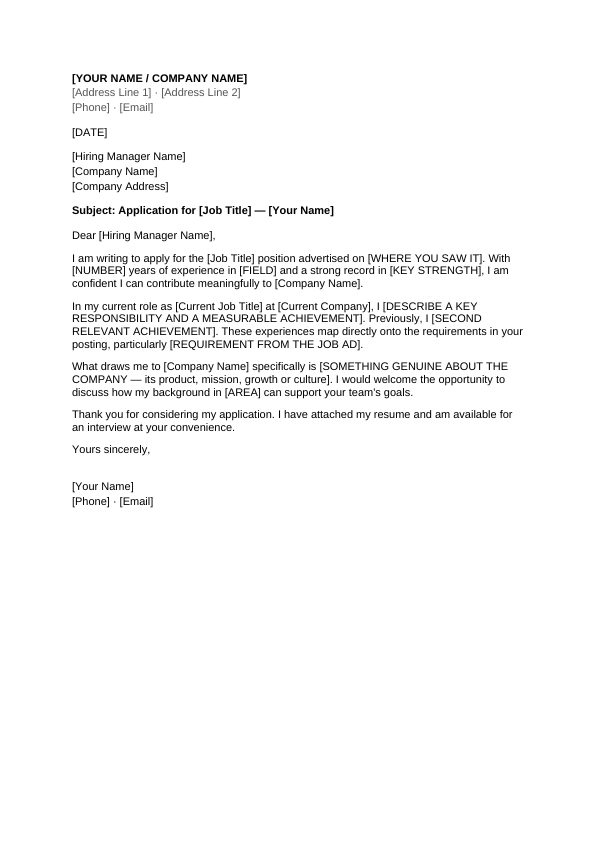
The three-paragraph structure
Paragraph one — the match. Name the role, where you saw it, and the single strongest reason you fit. Not your life story: one sentence of positioning. "With six years managing logistics teams across the GCC, I am applying for the Operations Manager role advertised on LinkedIn" beats three sentences of throat-clearing.
Paragraph two — the proof. Take the two or three requirements that matter most in the job ad and answer them with evidence. The formula is claim plus example plus result: not "I am experienced in cost reduction" but "at Gulf Freight I renegotiated carrier contracts, cutting per-shipment costs 14% in a year." Numbers are not decoration — they are what makes a skim-reader stop.
Paragraph three — the why and the ask. One genuine sentence on why this company (their product, market, growth — something you could not say to their competitor), then a confident close: you would welcome an interview, your resume is attached.
What hiring managers skim for
Three things: the role name (proof the letter is not a blast), a keyword match to their top requirements, and any number that signals real results. Make those visible on a ten-second read and the letter has done its job.
Mistakes that get letters binned
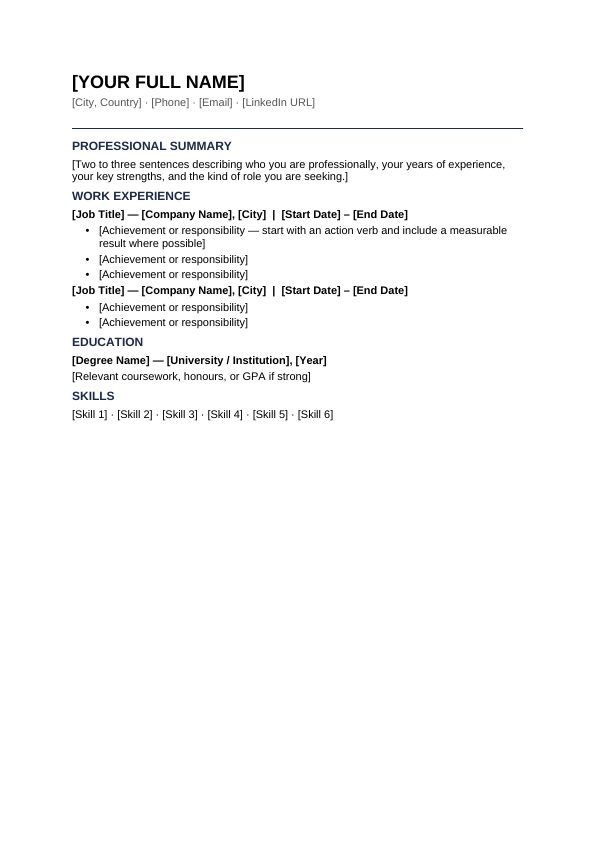
Repeating the resume in sentence form — the letter should interpret your experience, not list it again. Opening with "I am writing to apply for…" followed by nothing for two paragraphs. Generic flattery ("your prestigious organisation"). Exceeding one page — 250 to 350 words is the sweet spot. And the silent killer: sending the same letter everywhere with only the company name swapped, which readers detect instantly because nothing in it could only apply to them.
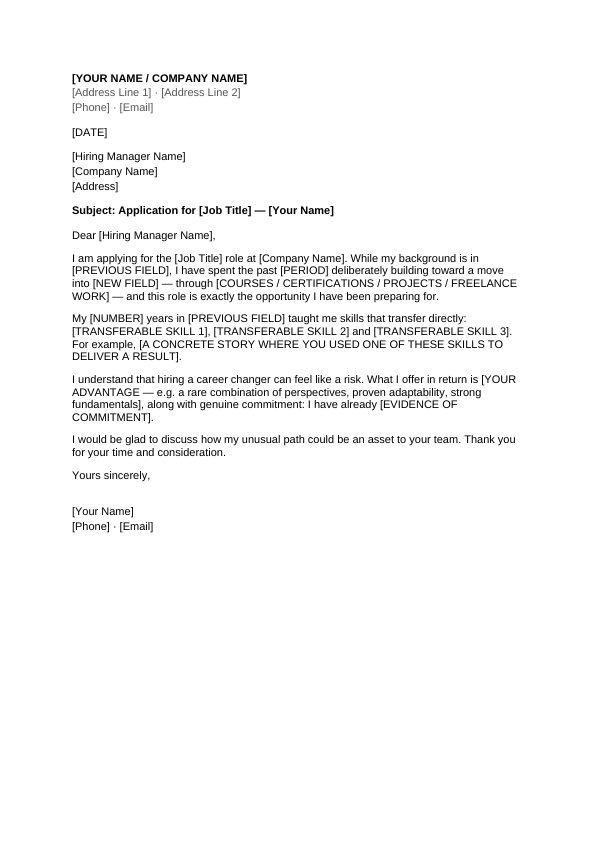
Changing careers?
The structure shifts: address the elephant immediately, frame your previous field as an asset, and lead with transferable evidence. Spend the proof paragraph on the skills that carry over, with examples, and show commitment to the new field — courses, projects, freelance work — so the switch reads as a plan rather than an escape.