How to Chase an Overdue Invoice (Politely but Effectively)
Most overdue invoices are not refusals — they are invoices stuck in someone's queue. The skill of chasing payment is applying steadily increasing pressure without ever damaging the relationship, and the secret is to decide your escalation sequence before you need it, then follow it like a calendar rather than a mood.
Day 1 overdue: the friendly nudge
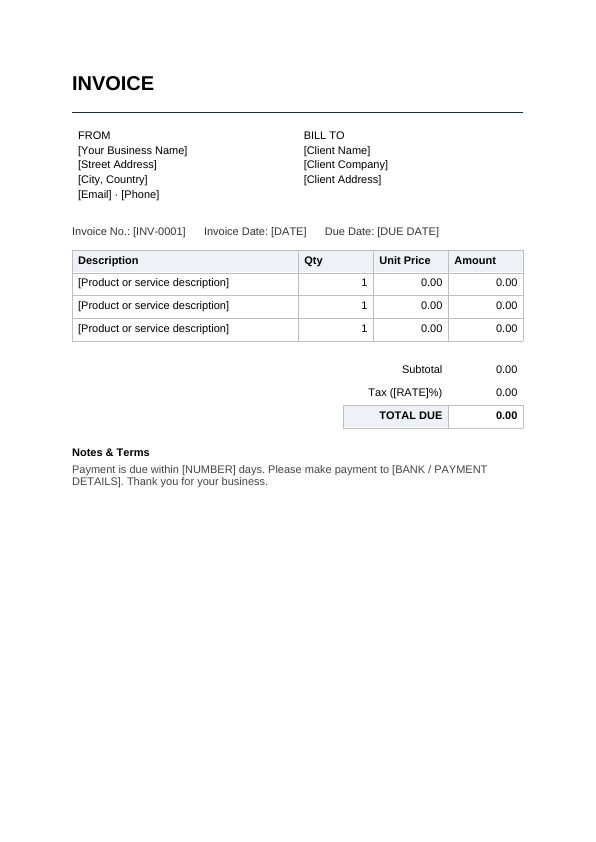
The day after the due date, send a short, warm email assuming good faith: the invoice number, amount and due date, a fresh copy attached, and a line like "this may simply have been missed — please disregard if payment is already on its way." Tone matters: most clients pay at this stage, and you want them to remember the reminder as helpful, not hostile.
Day 7–10: the formal reminder
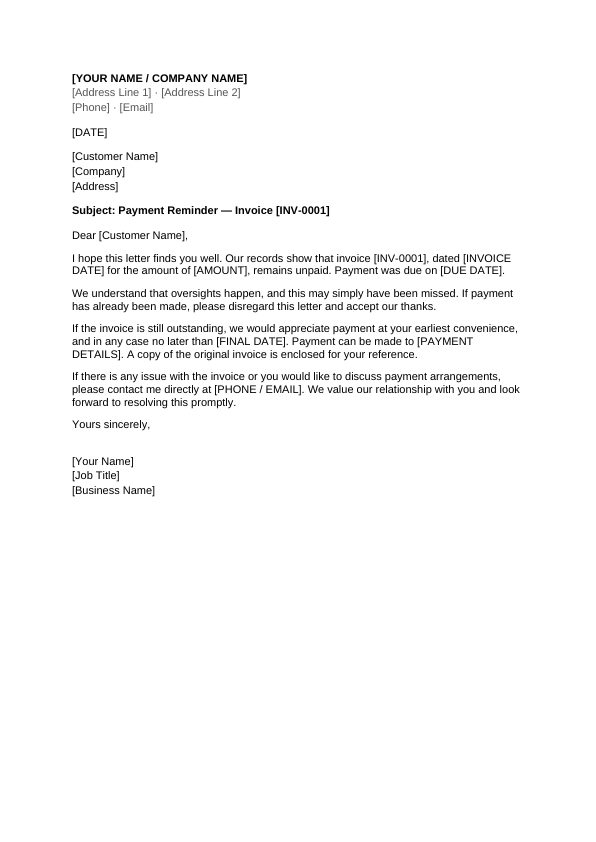
If a week passes, switch from email-casual to letter-formal. Reference the original invoice and the first reminder, restate the amount and a specific final date ("no later than 28 June"), and include payment details again so there is zero friction. Ask directly whether there is any issue with the invoice — sometimes there genuinely is, and surfacing it now beats three more weeks of silence.
Day 21–30: the firm letter
The third contact states consequences plainly and politely: late-payment interest if your terms include it, suspension of further work, and your intention to escalate — to a collection agency, small-claims process, or the client's senior management — if payment is not received by a final date. Send this one by a method with proof of delivery. Crucially, keep the door open: offer a payment plan if cash flow is their real problem. A scheduled half now and half next month beats an invoice that ages to a write-off.
Pick up the phone
Between the written steps, call. Email is easy to ignore; a friendly call that asks "is there anything holding this up at your end?" often dislodges an invoice in minutes — a missing PO number, an approver on leave, bank details they never received. Note the date, the person and what was agreed, and confirm it back by email.
Prevent the next one
Persistent late payers are telling you something. Tighten terms for repeat offenders: deposits up front, shorter payment windows, work pausing automatically when an invoice goes 14 days overdue. State these terms on the invoice and in your contract. The goal is a system where paying you on time is simply easier than not.